

My story
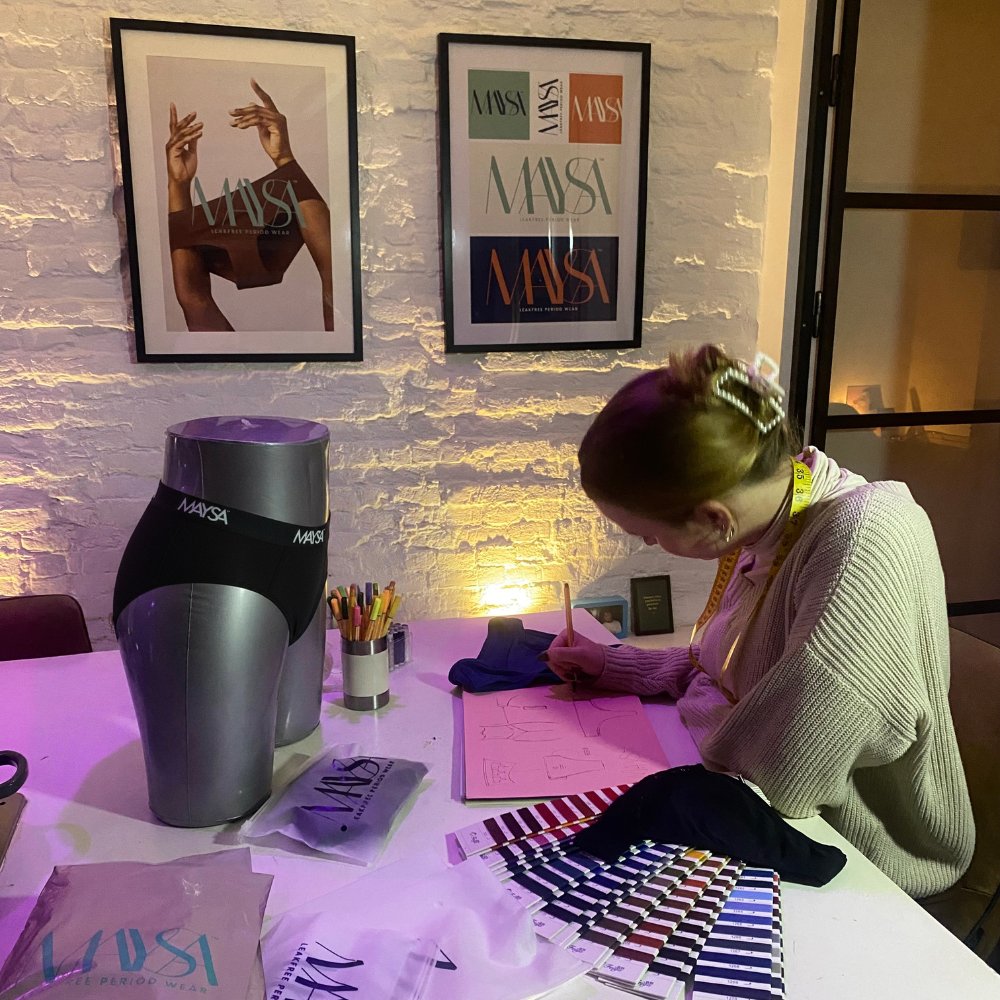
About Maysa
Hi, I'm Maysa! Well, not literally but I am the name behind your new favourite period wear. I'm here to help you experience your period in a comfortable, stylish and sustainable way.
Let me take you back to how it all began...
Like many women, I was dealing with the hassle of disposable tampons and sanitary pads every month. Not only were they uncomfortable, but they were also bad for the environment. Every month, I threw away so much waste that I started to wonder: ‘Isn't there another way? Can't this be better?’ And that's when the idea for Maysa came about.
The search for the perfect solution
I went looking for period underwear, because that seemed like the perfect solution.
But honestly?
Everything I found was either extremely expensive or looked like granny knickers in black only. And then they often used materials that made me wonder, ‘How sustainable is this, actually?’ It just didn't feel right. I wanted something that was not only good for me, but also for the planet. So I decided to do it myself!
My mission
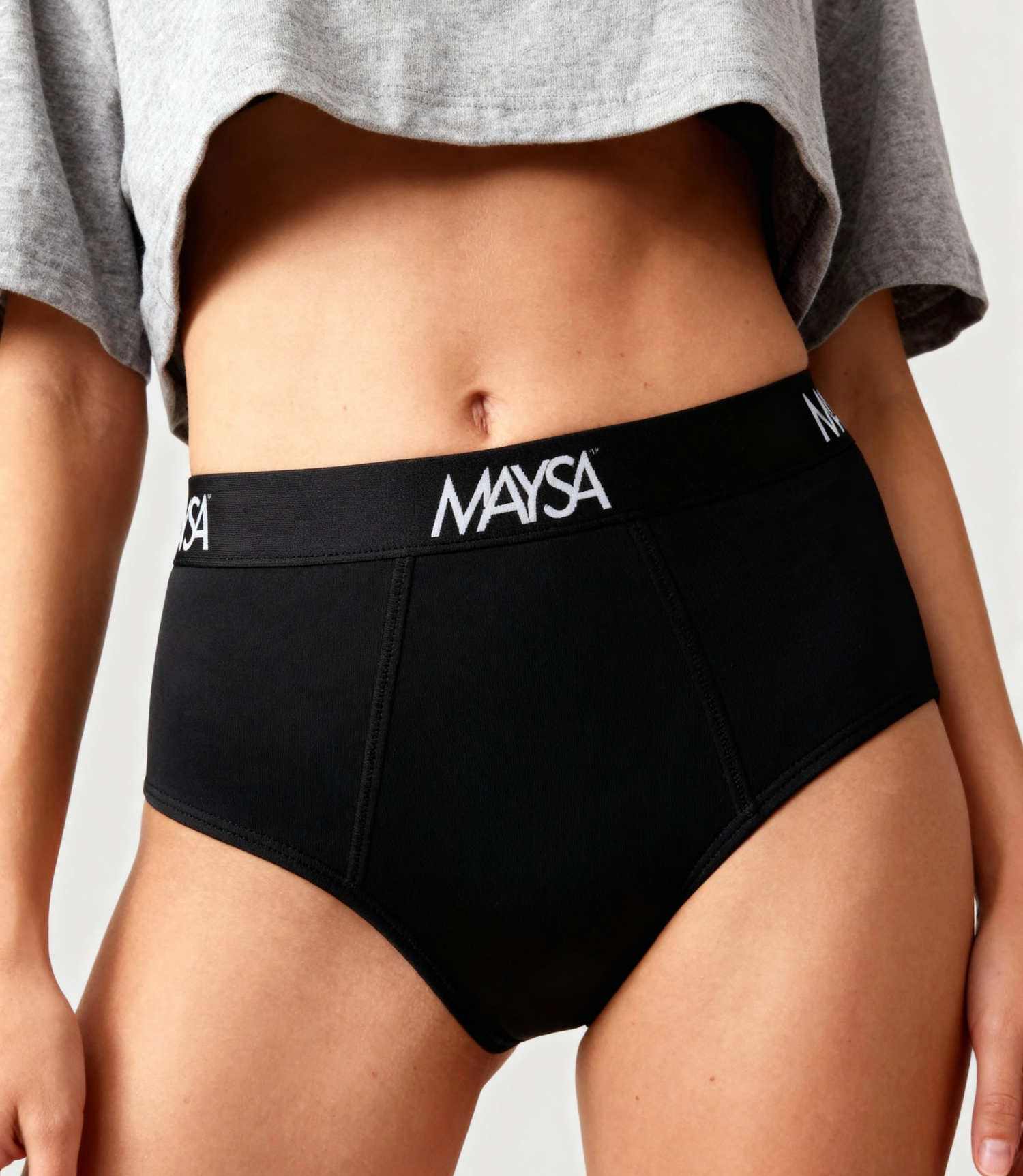
With Maysa, I want to create beautiful, affordable and sustainable period underwear that women feel good in. No more compromises. Because why should we have to choose between comfort, style and the environment?
That's what I stand for!
Making conscious choices that are as good for us as they are for the world around us.
interesting...
Tampon facts to consider
Non-biodegradable: Tampons contain synthetic fibres and plastic, which take 500 to 800 years to decompose.
Chemical exposure: Many tampons are bleached with chlorine, which can produce dioxins. These harmful chemicals can accumulate in the body.
Waste production: An average menstruating person uses 11,000 to 16,000 disposable products in their lifetime, creating enormous amounts of waste.
Plastic pollution: Tampons with plastic applicators contribute to 200,000 tonnes of waste annually that is difficult to break down and harmful to the environment.
Even organic cotton tampons have a large ecological footprint, as cotton cultivation consumes a lot of water and pesticides.